Thursday, 7 April 2016

Warsaw

The hostel in Warsaw is in Praga Poludnie, an affluent, leafy suburb of the city, a few minutes’ walk to the Polish National Stadium. It is a large, 3 storey family house, built in the 1930's and the owner, Ewe, lives upstairs on the top floor with her husband. On the middle floor, there are 5 large bedrooms (I think) and two bathrooms, which is a pretty generous ratio. It is immaculately clean and very quiet. There are many restaurants and small bars close by and I eat each evening in a Turkish restaurant that does fantastically succulent lamb chops with freshly baked Turkish bread, salad and sweet EFES beer. Lovely. I try to extend the 2 nights, but she is fully booked, so I resolve to get a flavour of the city and to revisit on my way back from the Baltic States.

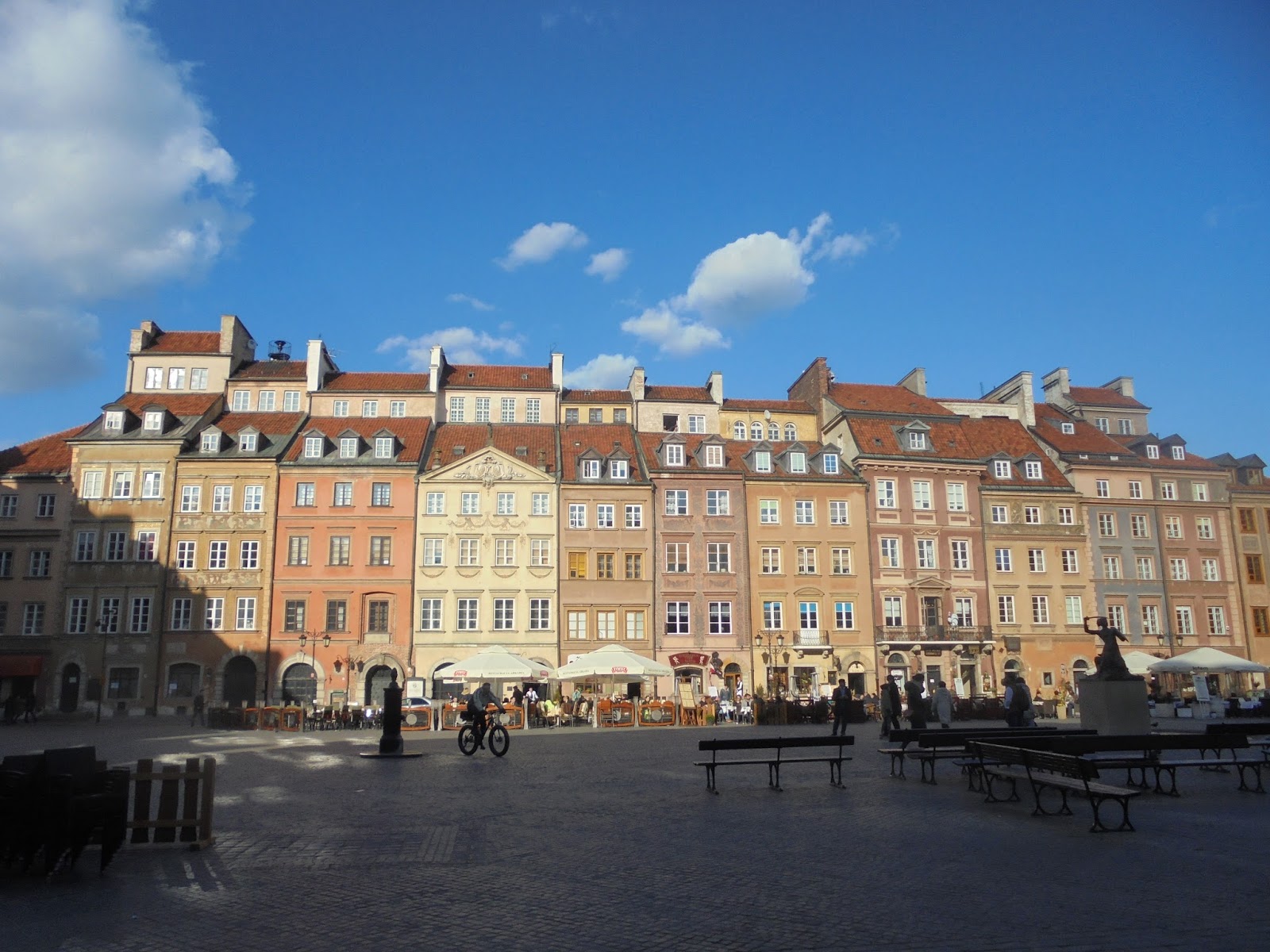
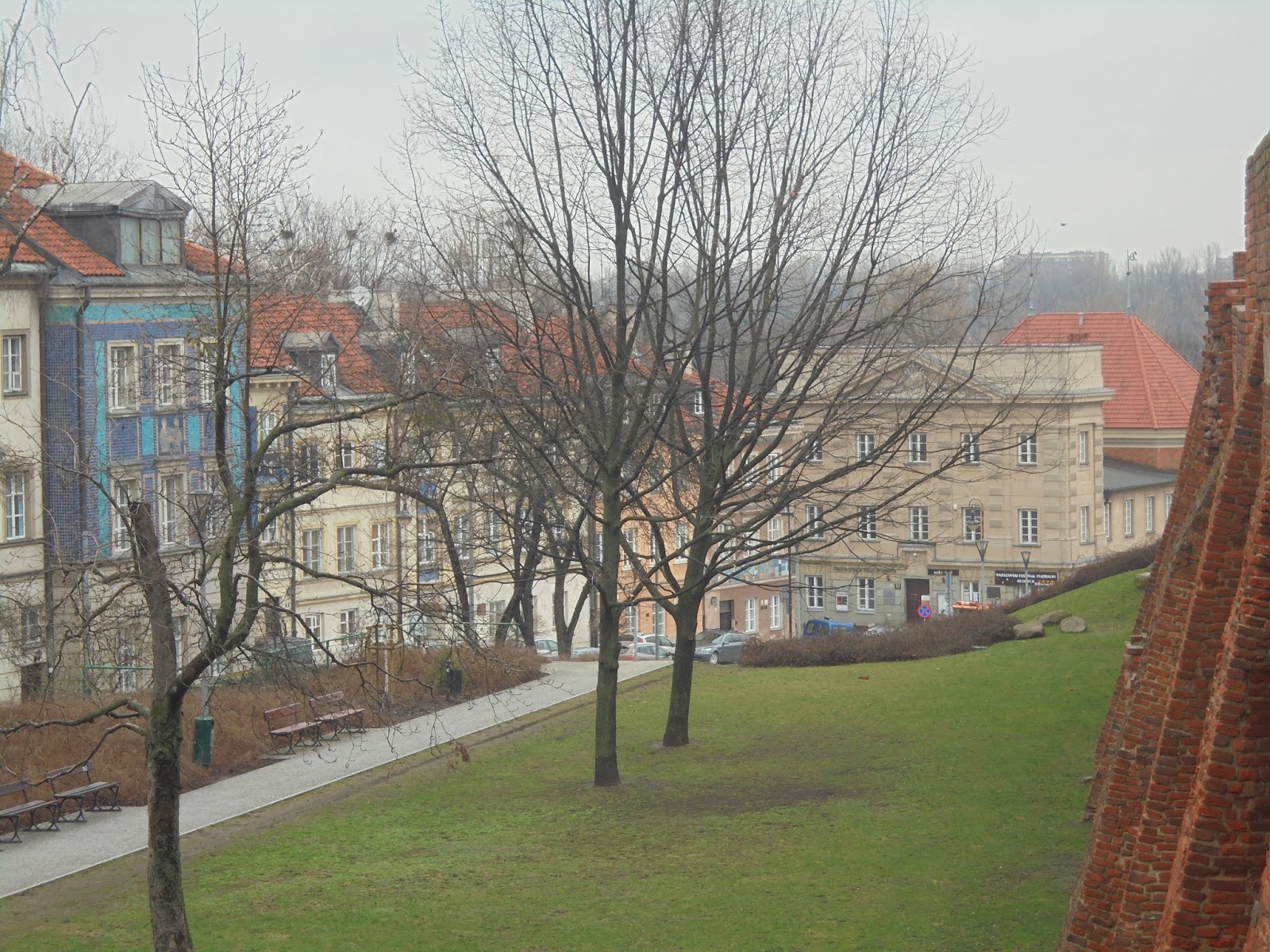
I spend the morning wandering around the Old Town, a maze of squares and cobbled streets, nestling against the imposing city walls. Most of the area was deliberately and systematically ruined by the Germans in the Second World War, in that time honoured tradition of trying to destroy a people’s spirit by obliterating their historical buildings, but much remains of the original buildings and much has been carefully and sympathetically rebuilt, so it is hard to spot the difference between the two.

Randomly, I find myself walking out of the Old Town and spot a sign for the Polish National Museum (at least I think that’s what it says), so I head in that direction. The main exhibition is one charting the history of Jews in Poland since the 12th Century. It is a rich and long history, with extended periods of peace and tolerance punctuated by short, sharp phases of oppression. Seeing it as a continuous whole, however, puts those short periods of intolerance into a wider historical perspective and perhaps helps demonstrate that Jewish History is more than just The Holocaust. The exhibition is skilfully and cleverly done, interweaving, audio and visual elements with documents and artefacts, so it is an immersive experience which I guess is supposed to make you feel part of that history. It is a fiction, of course and a welcome one, as not all periods of history would have been fun to try and exist in.

Indeed, one can’t help but be compelled and repulsed by the history of the Jews in Europe between 1933 and 1945. Part of the exhibition chronicles the life of the Warsaw Ghetto, where, in the 1940's, approximately 400,000 Jews were contained in a walled area of around 3 square kilometres until its ‘liquidation’ in 1943, when most of the inhabitants were sent to Treblinka. There was an armed uprising and an SS Officer called Stroop was despatched by Himmler to put it down. He produced a remarkable report (The Stroop Report) on the work carried out, contained in what was intended to be a leather bound commemoration album for Himmler himself. It details with dry, cold accuracy the systematic destruction of the ghetto, block by block, house by house in matter of fact, nonchalant prose. There are lists of people killed and equipment captured, of houses raised to the ground, of bunkers where people tried to hide, being emptied or burnt. The album contains an astonishing collection of around 52 photographs which bear witness to the activities carried out, each with a hand-written description beneath: a group of people, mostly women and children, being removed from a hiding place, hands raised in surrender, a young boy looking both frightened and bemused, a German soldier looking directly into camera (‘Forcibly pulled out of dug-outs’), three people, a young man and two women, probably in their early 20's, captured by German soldiers (‘These bandits resisted by force of arms’). The photographs are incredible and unique spots of time, sometimes beautiful in their composition and always chilling in terms of their content. They are clear, sharp-edged and it seems that the only thing that separates me, now, from that event, then, is the split-fraction of a second it takes for a shutter to open and close.


The National Stadium
Hostel balcony view

Old Town

Royal Palace
Colourful Restaurant
City Walls
Polish Hokey Cokey Champion shows how it's done
St John's Church. What a fantastic door!
Bar candle holder. Beware the dangers of alcohol!
Monument to Unknown Ghetto Heroes
Museum of Polish History. Located at the centre of what was the Jewish Ghetto
'Forcibly Pulled Out of Dug Outs'
'These Bandits Resisted by Force of Arms'


Stroop report information and pictures

Thursday, 31 March 2016

Poznan

The Capital City of Poznan, to give it its full title (although no longer the capital), is Poland’s fourth largest city and one of the oldest, with a core population of around 0.5 million, but extending to 1.4 million if the scruffy industrial suburbs and small connecting towns are included. I did read a potted history of the city, but like much of Poland, it has been pulled backwards and forwards by many different competing countries: Czechs, French, Prussians, Germans, all have had a go at possession at one time or other, but it still retains a strong feeling of pride and independence. I have a more traditional hostel (by that I mean it is in an old, traditional, four storey building, with worn wooden bannisters and hand rails, creaky wooden floors, stair treads partially covered with old linoleum and it is full of lots of noisy young people, Americans mostly, working in an orphanage close by). It is clean (and cheap, at £8/night) and located in the Old Town, just a short 10 minutes’ walk from the Town Hall.
The Old Market Square is enclosed by a number of tall, gabled houses, similar to the Dutch design but wider and consisting of lots of different colours – pink and white, buff cream, burnt umber, blue and gold, mint green. They surround the 16th Century Renaissance Town Hall, which is a very strange mix of architectural styles, Byzantine verdigris domes, Italianate decorations and motifs, Northern European brown brickwork sections, (unless this is a style in its own right, which I've not come across before). A network of cobbled streets leads away from the square and they are full of intimate bars, clubs, pubs and restaurants. It is like a stag weekend destination, which the stag weekends have failed to discover. My favourites are the cellar bars, which have a single, small doorway opening onto the street from a steep wooden stairway, so you can’t see what the place is like until you enter and descend to the bottom of the steps where you are suddenly right in the middle of a brick-work cavern. Of course, it would then be impolite not to have one drink, so it’s amusingly hit and miss. They are mostly full of students, counting out change to see if they can afford another shot and who are curious about how and why I've ended up in Poznan.


Beyond the Old Town itself is a busy commercial and industrial city. Apart from the many churches and museums I visited, I did go and visit a newish shopping complex called Stary Browar, which has won some sort of award as the best shopping mall in Europe. Well, the former brewery building is certainly a pretty impressive, albeit almost empty (soulless?), cathedral to consumerism, with glossy, designer shops in a vast, industrial brick and glass space. On my way to the real Cathedral, I pop into a much older, smaller, concrete shopping mall to get out of the rain for a bit. It is full of people shopping for things they might actually need. The coffee shop here is a place where friends meet, old couples sit, content in their silence, business men kill time before a meeting somewhere, a student, with very good English and piercing blue eyes sits revising. (I realise that all people, almost without exception, have blue eyes. I spend the rest of the day looking to see if I can see any people with brown eyes, but there are none, apart from a single Japanese couple. Strange.) An older lady next to me gets up to leave, says something and then leans across and grasps my arm warmly for a few seconds, smiling, and gesturing to the fact that I’m making notes in my notepad. I have no idea what she says, but I think I prefer the mentality of the old shopping centre rather than the new and I’m left pondering how long the city will remain as it is. Having said that, if the Czechs, French, Prussians, Germans et al have all tried and failed to change the place, maybe consumerism will fail too?

Old Market Square
Town Hall
Market Square (Again)
Hostel Stairs. Hmmm. This might be interesting
But a nice, bright, airy room..
...with a view
Stary Browar
Outskirts of the city. Yes, it was cold, wet and 'orrible
Poznan Cathedral
The Gold Chamber
The Kings of Poland

Sunday, 27 March 2016

Humanity 4, England 3, Germany 2. What will remain of us is love.

The Brandenburg Gate in Berlin, was opened in 1791 and has become a cipher of Berlin city pride and, by extension, of the German nation. Marched through by a conquering Napoleon and later, in 1933, by SS Storm troopers and later still by conquering Russians after some of the bloodiest and intimately brutal fighting of the 2nd World War, it has been both a symbol of triumph and defeat. I was expecting something imposing, frightening, a stark demonstration of German national might and the symbol of an empire that would last a thousand years. Instead, with its soft yellow stone mellow in the March sunshine, surrounded by Hotels and restaurants, bars, Starbucks and milling tourists, it actually seems a lot smaller than I’d imagined and quite homely and inviting.

Chatting casually to an English guy and his American wife (now a UK citizen, after much effort and having to answer some silly questions, including one on Torvil and Dean, for God’s sake), I discover by accident that England are playing Germany in a friendly at the Olympic Stadium. Now that will be something to see, so I walk some 8 kilometres to the ground, eventually get a black market ticket, have a few beers and wait for the game. I’m a little on edge, as I sit in a bar which is crammed full of German supporters, keeping myself to myself, but people are very friendly, one group buying me a ‘special’ dark beer which is only available at limited outlets, apparently. I did watch it being poured, just in case! All good. My fears are allayed temporarily, but stirred again by the extensive police presence of blue and silver riot vans, windows protected by wire metal frames, some with barking police dogs. The police seem relaxed though, hanging around in groups, chatting with each other whilst casually watching passers-by with nonchalant languor in the warm early evening sun. It takes around 45 minutes to queue to get into the ground due to the security and it feels a bit disorganised, but I get to my seat in the German supporter’s end. The stadium is actually the same one where Jesse Owens won 4 Olympic gold medals in 1936, the first black man to do so, under the unamused gaze of Adolf Hitler. Fantastic to be in such an architecturally and historical important monument. I find myself next to 3 lads from Wolverhampton and two from Leeds. We cheer the team on and of course, we are 2 goals down in about 20 minutes. It could be another of those dire England performances! What transpires, however, against all the odds, is an extraordinary second half performance, including a brilliant side-step goal by Jeremy Vardy and within a few minutes of the end of extra time we are 2-3 up. Unbelievable and fair play to the German supporters who didn't react at all to the triumphant singing at the end! What a performance, what a game, what an atmosphere!

‘Against all the odds’ has a different but similar type of resonance after visiting an incredible exhibition at the Menschen Museum today by the anatomical artist Gunther von Hagens. The exhibition consists of plasticised bodies and body parts, or put simply, dead people, whose bodies have been donated to science and subjected to a 4-part process of dissection and embalming which takes around 1500 hours over the course of a year for each body. The captions of the displays describe how we work mechanically and how unlikely our being here, right now, really are, as the people we are. An ejaculation contains within it some 200 million to 500 million sperm. Only around two hundred reach the site of fertilisation, the fallopian tubes. Only one, sometimes, enters and fertilises an egg. If another sperm did so, that would produce a different person. The chances of us being here are slim. Simply to be, is an act of defiance, against all the odds.

The once alive bodies, partly stripped to reveal the delicate, complex interweaving of muscle and sinew, the fragile filigree of tendons and ligaments are in various poses, both funny and awful: ballerina, skate-boarder, archer and, most amazing of all, an entwined pair of lovers, perpetually frozen forever in an interlocking, almost desperate embrace. It reminds me of the Philip Larkin poem, ‘An Arundel Tomb’, where the hands on the effigies of a dead husband and wife gesture towards each other but never quite touch, in an ambiguous image of eternally frustrated, emotional and physical longing. The exhibition is poignant, touching and moving almost to the point of tears.


Leaving the exhibition, I’m confronted with the bustle of Alexanderplatz, full of people, who I now see as beautiful, diverse, complex, funny, intelligent anatomical structures. The terrorists who strive to destroy this beauty have no beauty in their souls. That, in part, may ultimately save us. To quote the last line of the Larkin poem, ‘What will remain of us is love’.

Hostels are useful for drying tents

Holi-Hotel Berlin. Described as a hostel, but absolutely fantastic!
Utilitarian East Berlin. I like it! Reminds me of Cavendish Square, in Swindon.
Berlin Cathedral
Errrr, name a gate beginning with 'B'. Think Hitler and rallies.
1930's Art-Deco Olympic Stadium
Come on England! Minute's silence for victims in Brussels.
Extraordinary. Is that what we are?
Ode on Vanity?
Skate Board Dude
Is this what love is? Is it both as much and as little as this?
Does it both join us and tear us apart?
Is that what will remain? I hope so.

Friday, 25 March 2016

I Amsterdam and Dual-Carriageways with Mythical Properties

I wake up early to the light and the sound of a mess of animal noises; bellowing cattle, sheep, the rasp of geese, the repetitive song of blackbirds developing a singular audio seed into expanding, Bach like variations, rippling ever outwards in complexity, the playful squabble of sparrows, who fight to gain purchase on the outer metal frame of the tent, depositing sticky globules of shit on the outer covering. It is a nice sound, but much too early! Off to Delft, which I arrive at in about 2 hours. Camp-site closed. Hmmm, that’s what comes of having a campsite book published 15 years ago. Hey Ho! Off to Amsterdam then. It was sort of inevitable!

After getting hopelessly lost on the Amsterdam ring-road, I think, Sod This! I know the city pretty well and I can get my bearings from the inside, so I head to the centre and manage to find a parking space on Rokin. Perfect. I scout around and find a cheap hotel. Sorted. They have an arrangement where someone picks up your car and delivers it back the following day. Dubiously I agree. Ahmed from Iraq turns up. Giving someone 31 Euros to steal your car sounds like a good idea, so that’s what I do.

Amsterdam at any time is just great. At night it is pure street theatre! The bars, the coffee shops (a few less than there used to be, but still 180, so I’m told), the fantastic architecture and the Red Light District, with prostitutes of all shapes and sizes in windows, framed by red lights, gesturing provocatively to Le Flaneur, in a mechanical, enticing, somehow compulsive and well-practiced theatrical performance. Everything is choreographed, from the clothing, to the glances, to the increased movement of hips and legs as someone becomes interested. In truth, the most attractive women are the ones on the street side of the glass who openly ogle with friends or as part of a couple. Their male companions pretend not to look really, although they do, furtively and with a pretence of not being that interested at all. It is all a performance, of course, onlooker and looker upon (and the observational roles become interchangeable, after a time) and it is not clear who is performing the most. I wander the streets, meandering from one bar to another and chatting with various people in each, constantly losing my bearings and then suddenly finding them again, although not always quite from the direction I was expecting, which is always a pleasant surprise! Cosmopolitan, sometimes raucous, easy going, friendly, picturesque, seedy, open and honest, pungent, humane, quirky, full of vitality and energy! I really like this country and this city!


After a couple of days on the north coast in the rain, at Sint Marteenszee (I realise I have to choose a type of rain to like, because if I don't like any types at all, I'm going to be in trouble), I pluck up courage. I’m both nervous and excited. I used to look at maps and atlases and wistfully imagine myself in those far off places. One of those places was the thin ribbon of land, that windswept road, the A7, battered by the elements, that runs from Den Helder, across the Ijsselmeer to Harlingen. It is a straight road that looks no thicker than a hair pulled tight and perhaps about to break. Just the sheer audacity of it! I used to imagine what it was made of: pontoons lapped by water, a great dyke, a bridge, a thin strip of concrete at sea level, barely wide enough to allow two cars to pass each other by and which, when the weather is rough, occasionally get washed off the road completely by the towering grey waves, never to be seen again, oak barrels tied to planks by thick ropes? It has mythical status in my mind. I can see the start of the road in the distance and the hairs on my arms and neck rise in anticipation. I don’t care if I’m washed away! Suddenly I’m on it, a perfectly straight road, a dual carriageway, with a raised dyke wall, seawards to the left and the vast Ijsselmeer to my right, just a stone’s throw away, in cool, hazy March sunshine. How fantastic is this, although a little tamer than my wildest imaginings! There is a coffee shop half way along, so I stop and drink strong Dutch coffee whilst looking at this inland sea, the point that all Dutch sailing ships from Amsterdam would have passed on their way to travel around the world. I press onwards, stopping at the other parking places along the way to savour the experience and then suddenly it is over; the inland sea gives way to flat, green fields. I have a strange sense of elation, like I have achieved something very special. A lifelong ambition has been realised? Well, yes it has and, as if on cue, the CD begins playing ‘Lucky Man’ by The Verve. I certainly am! With fire in my hand. I am expecting the world to have changed, but it still looks the same: large, wide grey skies (with many different shades of grey), the occasional church spire on the distant horizon, willows at the side of the road, with all their branches removed, looking like defiant forearms and fists resisting the sky. Nothing much has changed, but also something has changed. That’s dual-carriageways for you. Some have mythical and mystical properties.

A cold, wet North Sea beach
Naval Museum, Den Helder
Blimey, 20 people are supposed to sleep in here. The smell must be unbearable!
Dam Square, Amsterdam
Night-Life, of a sorts
My favourite part of the city, hidden down a narrow alley, the Begijnhof
An artist's shoes
Old fashioned automatic door closer: pulley, rope and a bag of sand. It is nice to be amazed at the obvious!
Groningen
Well, what can I say?
The first 1000 miles!